| Approach | Best for | Missing if used alone | Production requirement |
|---|---|---|---|
| Vibe coding | Quick demos and interface exploration | Data model, auth, billing, QA, observability | Architecture and review |
| AI-first development | Scoped product builds | Still needs human judgment | Specs, tests, security, monitoring, deployment controls |
You can ship a weekend demo with Cursor and feel like a genius.
The login screen appears. The dashboard renders. The AI chat interface responds. The founder feels like months of work collapsed into a few days.
Then the first real user hits a billing edge case. An investor asks who owns the auth flow. The API integration fails silently. The AI feature works in the happy path, but no one knows how to measure whether the answer is actually good.
The AI did not fail.
The system around it did.
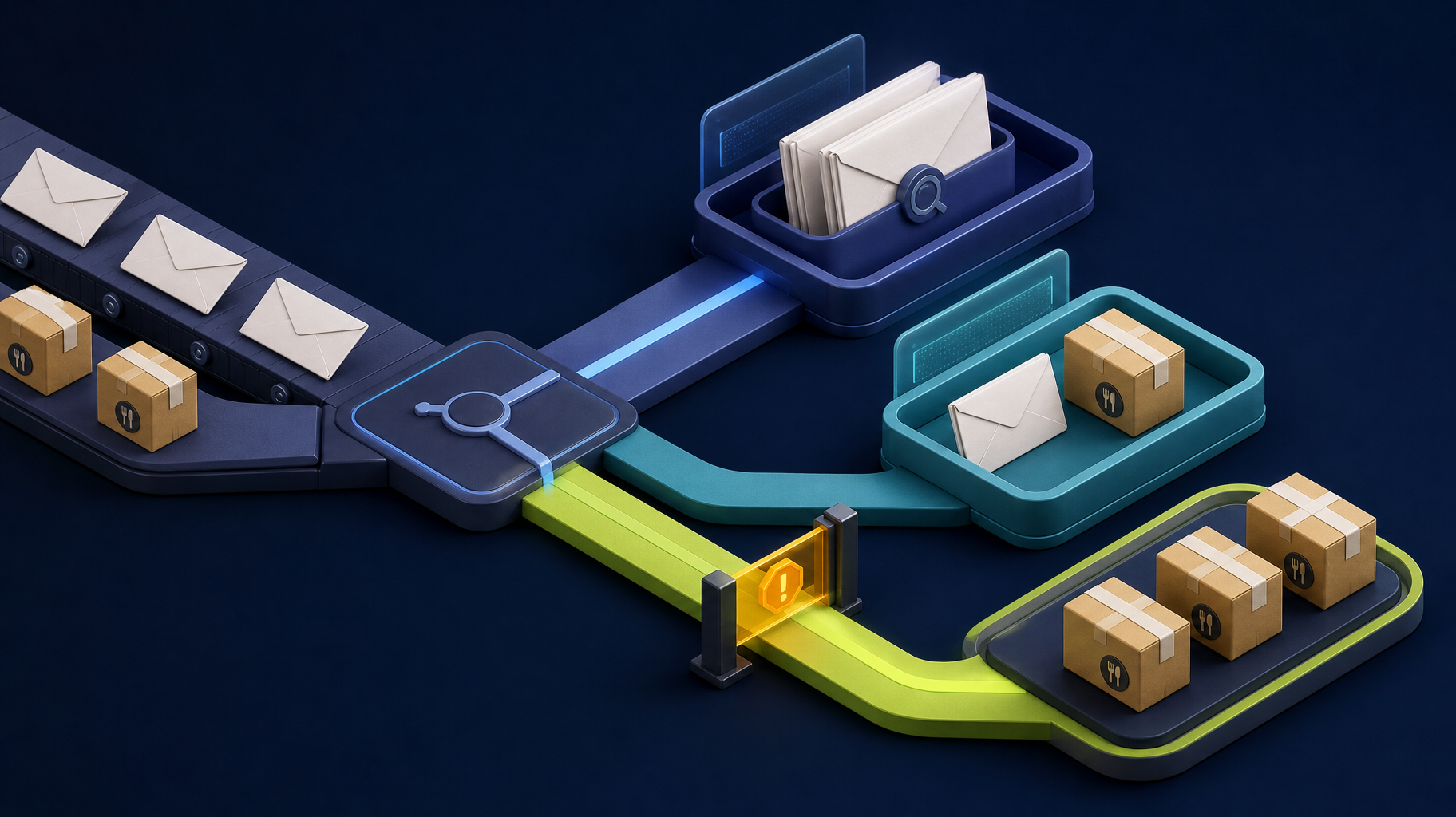
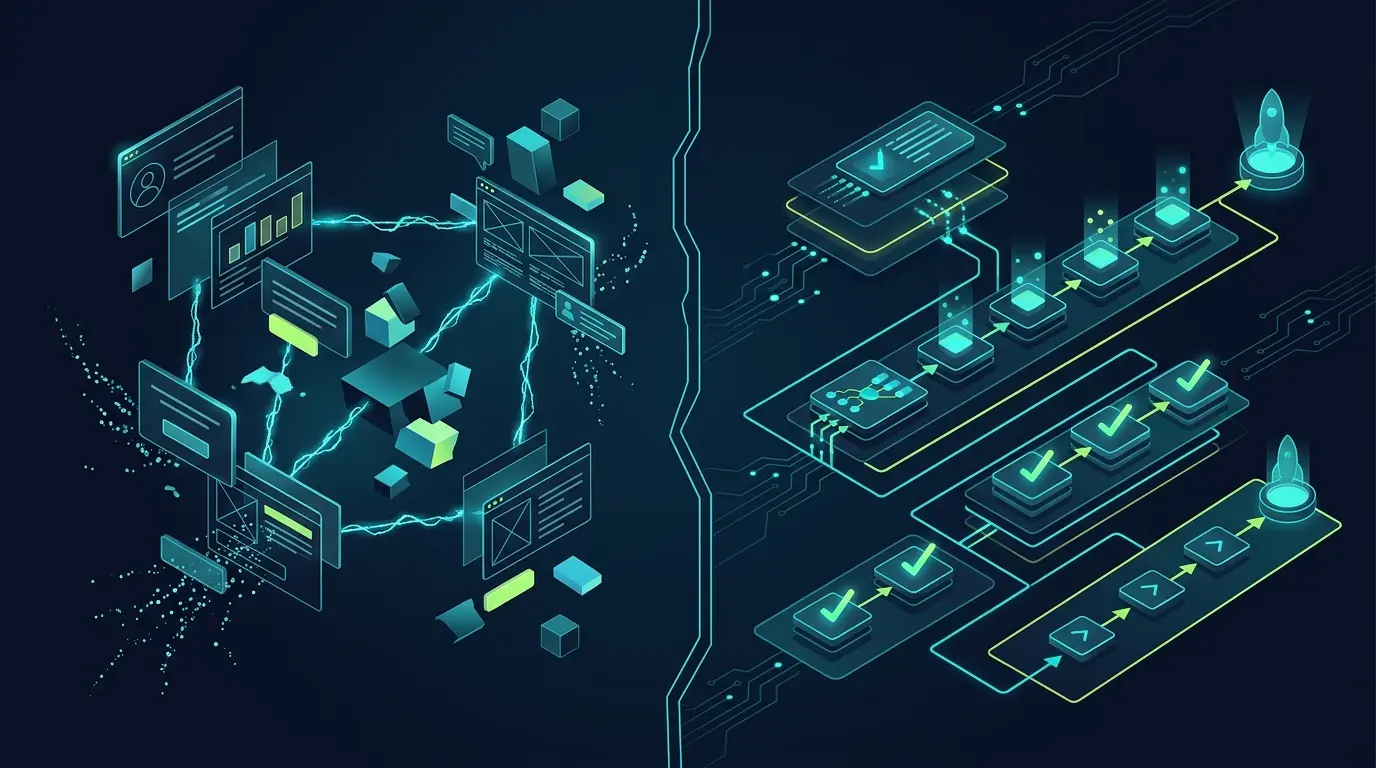
That is the difference between vibe coding and AI-first development. One creates a demo. The other creates a product that can survive real users.
The uncomfortable productivity evidence
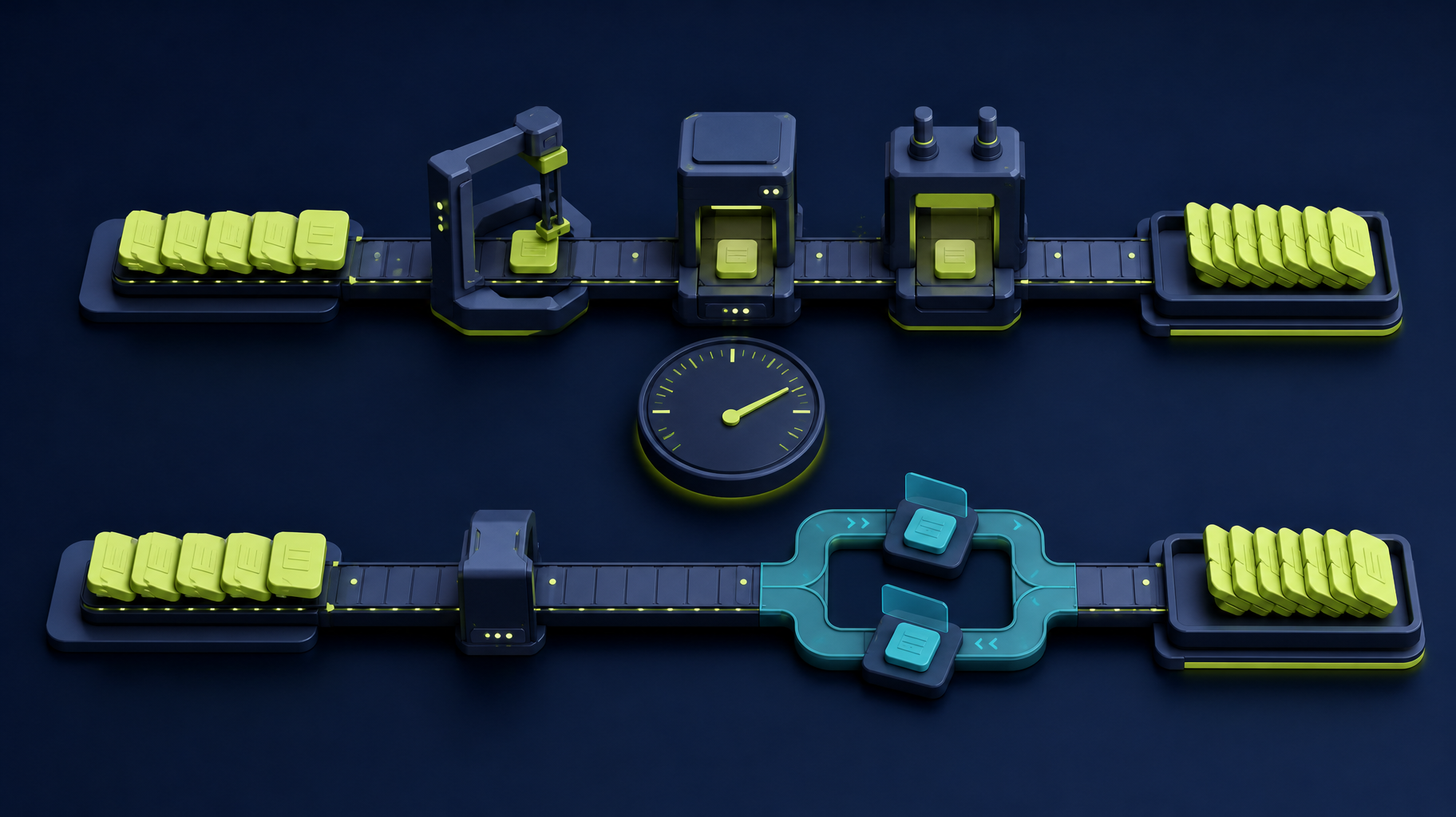
In July 2025, METR published a randomized controlled trial where experienced open-source developers took 19% longer when they were allowed to use early-2025 AI programming tools on their own repository tasks, even though they expected AI to make them faster and believed afterward that it had helped.
That result should not be used as a lazy argument against AI. METR’s February 2026 follow-up makes the interpretation more nuanced: in a later experiment, the raw results showed some evidence of AI speedup, but METR warned that the signal was unreliable because more developers did not want to participate if they had to work without AI, some avoided submitting tasks they would not want to do without AI, and agentic workflows made task-level time tracking harder.
Their updated conclusion is closer to this: developers are likely getting more value from AI now than they were in early 2025, but measuring that value with simple task-level timing has become much harder.
That strengthens the point for founders. AI productivity is not automatic. It depends on which tasks are selected, how the work is scoped, how agents are used, and how the output is reviewed.
AI can generate code quickly. But production software is not just code. It is architecture, product judgment, edge cases, state management, security, deployment, QA, and maintenance.
If those parts are weak, AI does not save the project. It accelerates the mess.
Vibe coding is exploration, not execution
Vibe coding has a place.
By vibe coding, we mean using AI coding tools to build by feel: prompting, accepting code, seeing what appears, and adjusting until the product looks close enough to the idea in your head.
That can be useful.
Founders should use AI to test interfaces, explore concepts, and make ideas visible quickly. They should use it to sketch product flows. They should use it to challenge assumptions before investing months into a build.
But a prototype is not a product.
A product needs users, permissions, billing, onboarding, emails, data integrity, recovery states, analytics, observability, admin tools, and support workflows.
An AI product also needs a plan for evaluating model output, controlling model costs, handling latency, and deciding what happens when the model is wrong.
This is where vibe coding breaks down.
It focuses on the visible surface of the product. It does not naturally force the hard architecture decisions underneath.
If you are building a customer portal, a referral workflow, a scheduling tool, or an AI feature inside a SaaS product, the technology is only part of the problem. The harder work is deciding what should happen when the normal path breaks.
The real bottleneck is no longer typing code
AI has changed the software development bottleneck.
The slow part used to be writing every line manually. Now the slow part is deciding what should exist, where it should live, how it should behave, and how to verify that it works.
That means the highest-leverage engineering skill is no longer raw implementation speed. It is system design.
At Somnio, we think about AI-first development as a coordinated engineering workflow:
- Define the product loop before generating screens.
- Design the data model before asking for components.
- Decide where data should live, who can access it, and how failures should recover.
- Use agents for implementation, not unsupervised decision-making.
- Use stronger review workflows for QA, security, and edge cases.
- Turn repeated patterns into reusable prompts, specs, and internal templates.
The goal is not to write less code by hand. The goal is to reduce the number of bad decisions that get multiplied by fast code generation.
What we have seen building real applications
Over the last few years, we have built full applications with AI-assisted workflows across Laravel, Vue, and React Native.
The pattern is clear: AI can dramatically increase throughput, but it does not remove product complexity.
Real applications still need registration, paid sections, API integrations, onboarding, email configuration, permissions, support flows, and deployment readiness. For full applications with those requirements, the realistic timeline is often 3-4 months, not a weekend.
That is still a major improvement over traditional delivery cycles. But it is credible because it respects the real scope of product development.
The biggest gains came from using AI inside a structured workflow, not from asking a model to invent the whole product at once.
What this looks like in production
Imagine an AI-enabled MVP with user accounts, Stripe billing, role-based permissions, three third-party API integrations, and an AI feature that helps users generate or evaluate content.
The weekend demo might prove the interface can work.
The production system has to answer harder questions:
- What data does the AI feature need, and what data should it never receive?
- Which actions need human review before they affect a customer?
- What happens when the model gives a weak, incomplete, or unsafe answer?
- How do you cap inference costs before one heavy user burns through the margin?
- Which jobs should run in the background instead of blocking the user?
- What needs to be logged so support can understand what happened later?
- Which checks run before each deployment so AI-generated changes do not break billing, auth, or permissions?
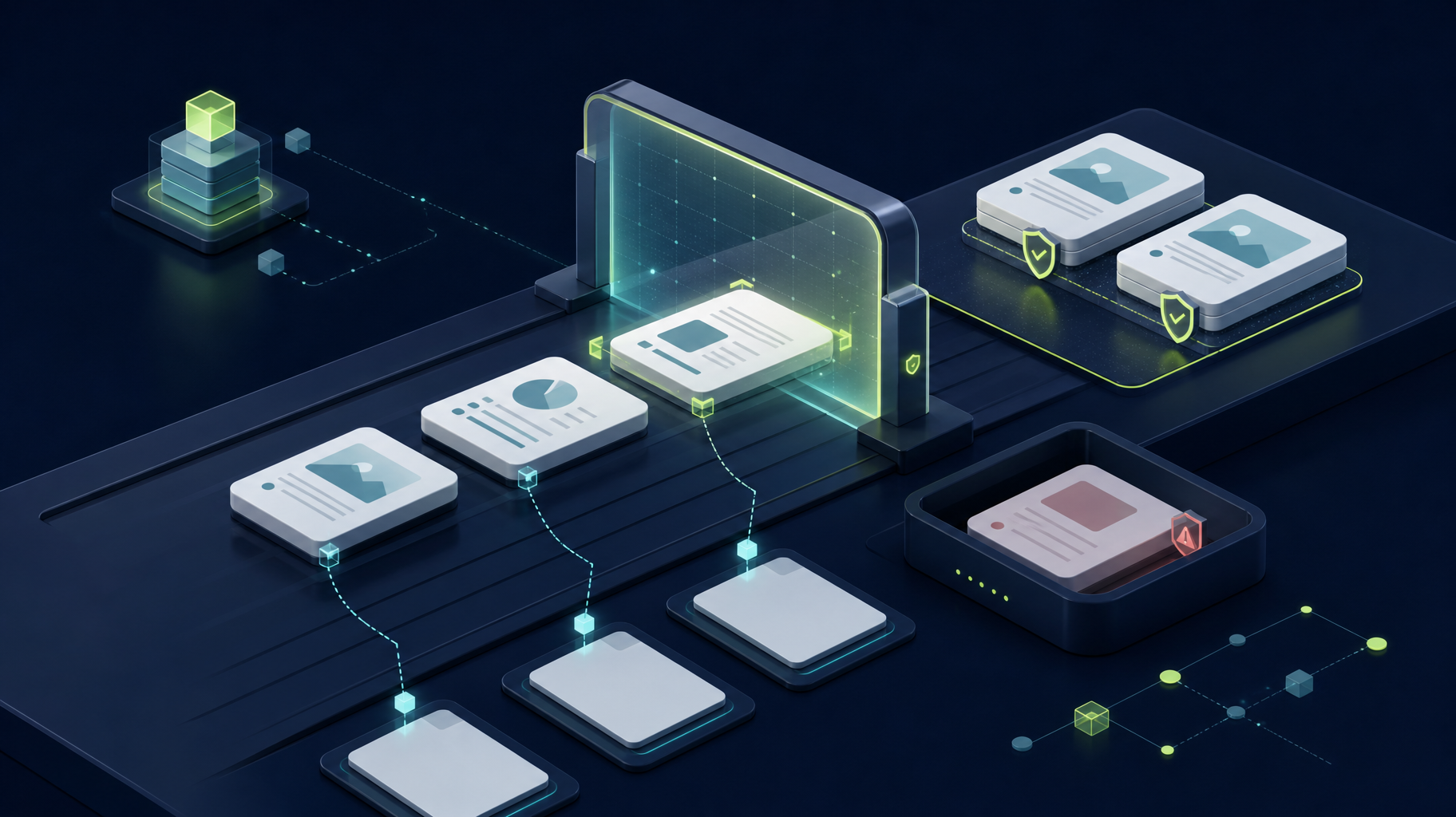
This is where AI-first development creates leverage. Agents can build against clear specs, generate tests, scaffold components, and speed up implementation. But the work that protects the product is the upfront decision-making: the product loop, data model, queue design, fallback paths, evaluation set, and monitoring plan.
The demo is week one.
The system that can bill, recover, and stay observable is the real product.
AI-first development needs architecture first
The teams that benefit most from AI are not the ones that generate the most files.
They are the ones that create the clearest boundaries.
When we say architecture, we do not mean a diagram that only engineers understand. We mean the decisions that determine whether the product behaves correctly when users, data, payments, integrations, and AI output collide.
Good AI-first architecture answers questions like:
- What is the one core product loop?
- Which parts of the product are deterministic software and which parts require AI?
- What data does the AI feature need to be useful?
- What should happen when the model produces a weak answer?
- Which state belongs locally, globally, on the server, or in the database?
- Which workflows should become reusable prompts or internal templates?
- Which checks must run before code reaches production?
Without these answers, AI becomes a faster way to create ambiguity.
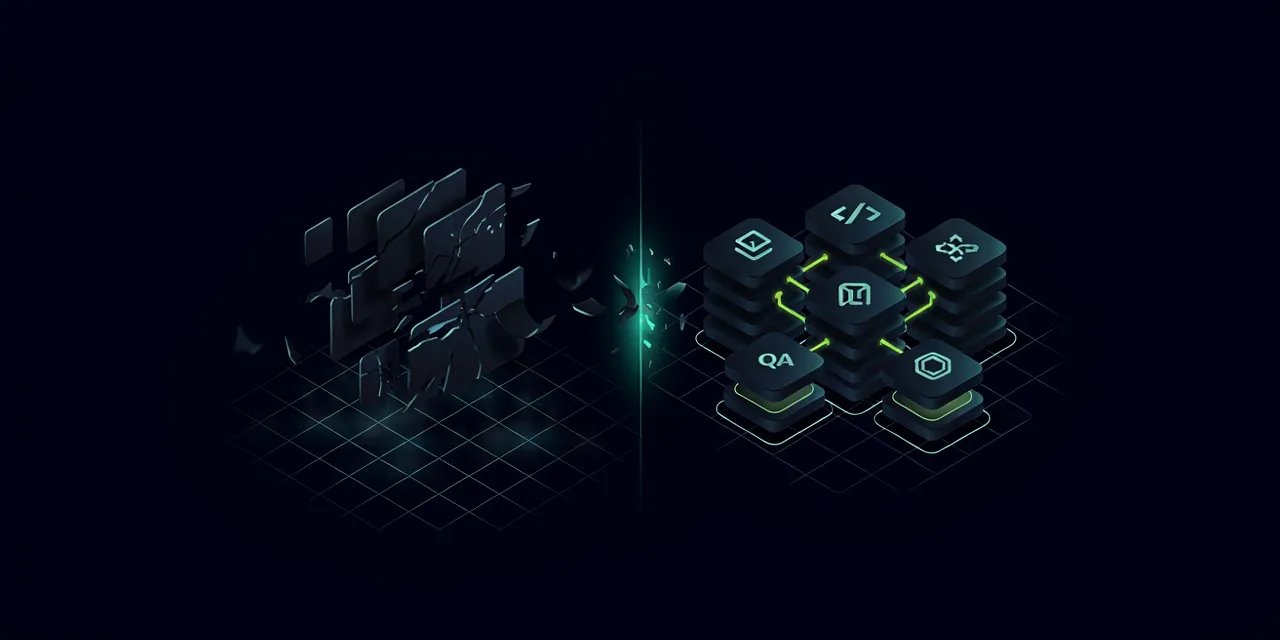
For regulated or data-sensitive businesses, this matters even more. If the product touches patient data, payment data, customer records, or internal financial information, the architecture has to account for permissions, audit trails, data retention, and what information is allowed to reach an AI model.
The Somnio point of view
We do not believe founders should avoid AI development.
We believe they should stop confusing speed with readiness.
AI-first development works when the workflow looks more like this:
- Product strategy: define the core loop and scope.
- Architecture: decide framework, data model, state boundaries, and integration patterns.
- Implementation: use AI agents to build against clear specs.
- Review: run human and agentic QA against security, performance, and edge cases.
- Pattern capture: turn repeated workflows into reusable prompts, specs, and templates.
- Deployment: ship with monitoring, feedback loops, and cost controls.
That is not vibe coding.
That is AI-orchestrated engineering.
Before you build the MVP
If you are building an AI product, the biggest risk is not whether the model can generate code.
The biggest risk is whether you are building the right system around it.
Before you spend months building, map the product, architecture, inference-cost, and QA risks in your MVP.
That is what we cover in an AI MVP Architecture Call.
We review your product loop, data model, AI feature boundaries, integration risks, model-cost exposure, QA approach, and launch scope. If you already have a prototype, we help you see what needs to change before it becomes production software.
Not ready for a call yet? Start with an AI-first readiness checklist. Look for the decisions your MVP has not made yet: user roles, data boundaries, fallback states, evaluation criteria, cost controls, monitoring, and support workflows.
Related resources
- AI MVP development
- AI-assisted software development process
- Development timeline estimator
- AI savings calculator
- MVP glossary
- Authentication glossary
- Payment processing glossary
- Deployment and CI/CD glossaries
- Architecture consulting