The Real AI MVP Roadmap: 8 Weeks To Validate, 3-4 Months To Build
The short answer: a serious AI MVP usually needs two horizons: about 8 weeks to validate the core product loop and 3-4 months to build a production-ready application. The 8-week phase should prove user value, AI quality, data flow, and scope; the 3-4 month build adds authentication, billing, permissions, integrations, monitoring, AI feedback loops, support, and deployment readiness. Weekend demos are useful for exploration, but they are not reliable MVP timelines when real users, sensitive data, model costs, and failure states are involved.
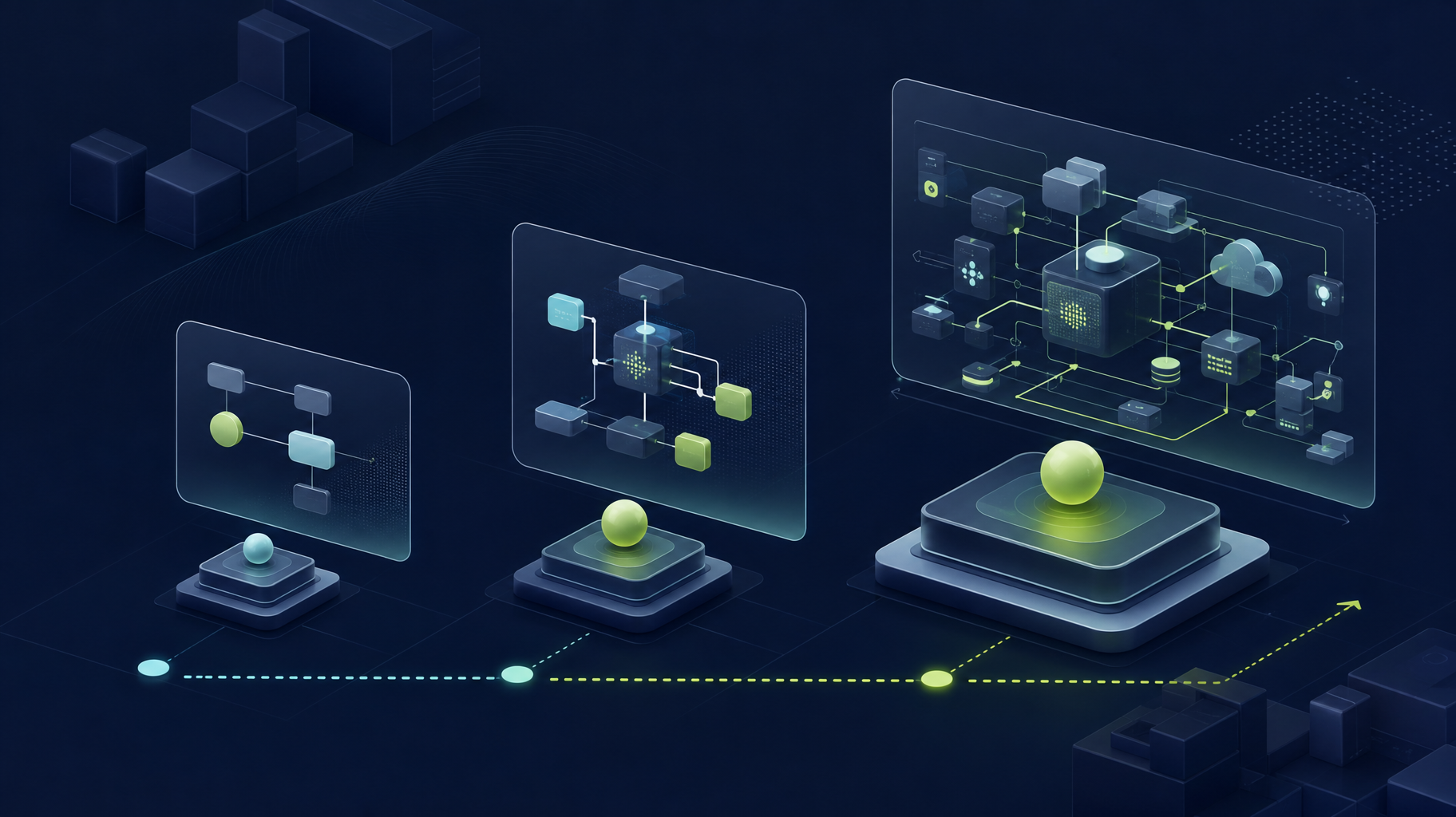
| Stage | Realistic timeframe | Purpose | Output |
|---|---|---|---|
| Demo/prototype | Days to 2 weeks | Show the concept | Clickable interface or narrow proof of concept |
| Validation build | About 8 weeks | Prove the core loop | Working workflow, user feedback, fixed-scope plan |
| Production MVP | 3-4 months | Support real users | Auth, billing, permissions, integrations, monitoring, feedback loops, deployment |
The most dangerous AI MVP promise is this:
“We can build the whole thing in a weekend.”
Sometimes you can build a demo that fast. Sometimes you can build a landing page, a mocked workflow, or a narrow proof of concept in a few days.
That can feel like progress until the first real customer touches it.
Then the questions change. Who can log in? Who can see which data? What happens when the model gives a weak answer? What happens when a payment fails? What happens when usage costs spike? What happens when a user needs support?
But a serious AI MVP is not just a demo.
It has users. It has onboarding. It has authentication. It has payment logic. It has emails. It has API integrations. It has admin workflows. It has permissions. It has error states. It has data that must stay consistent. It has AI outputs that need to be evaluated.
That is why we prefer a more honest framing:
Use 8 weeks to validate the core loop. Expect 3-4 months for a production-ready application with real business workflows.
That is still fast.
It is also much closer to how real AI products get built.
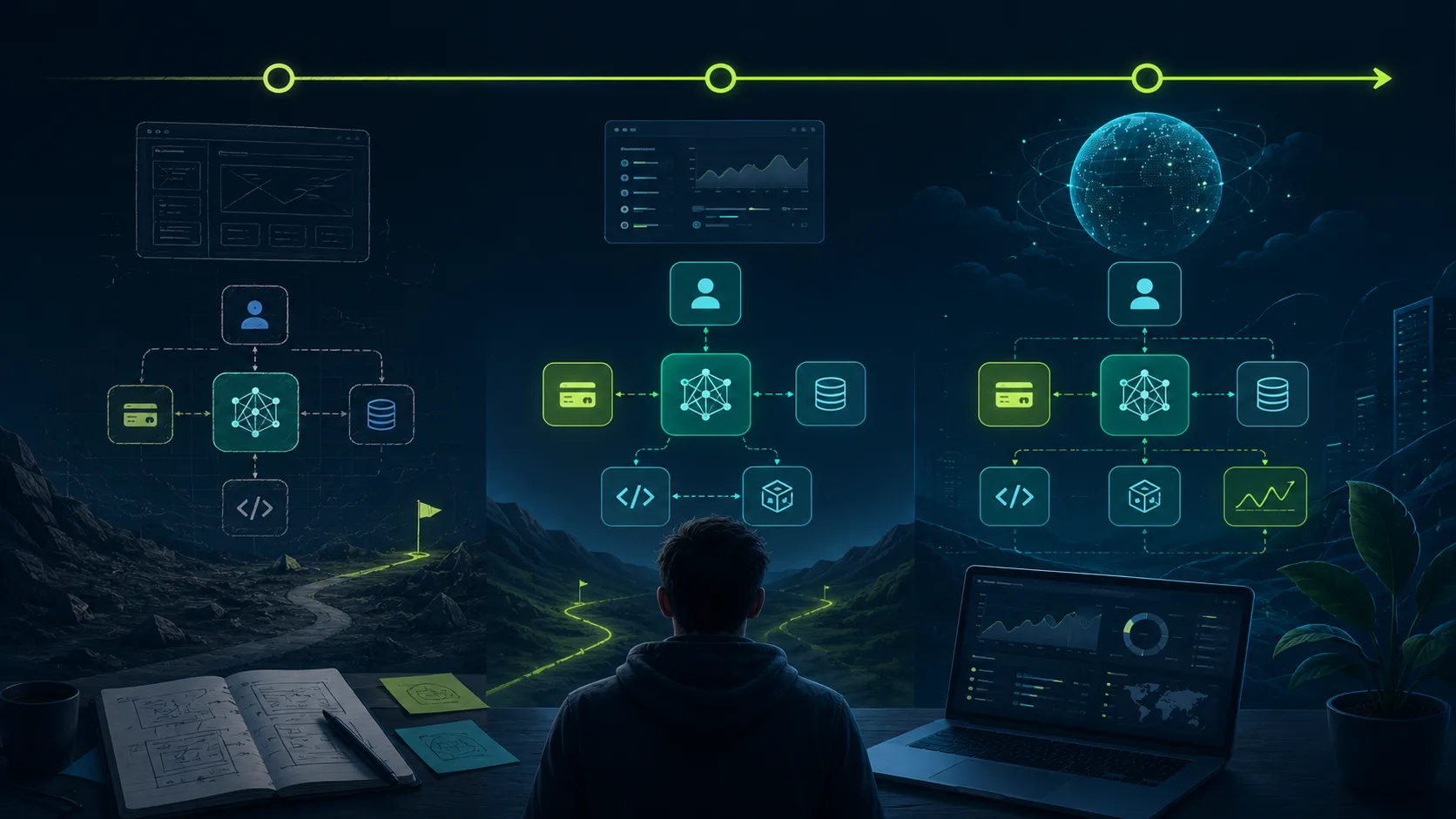
By week 8, the goal should be a working validation build, a fixed-scope product spec, a week-by-week build plan, and a clear answer to whether the product is worth turning into a production system.
By month 4, the goal should be a real application with authentication, billing, permissions, integrations, monitoring, AI feedback loops, and support workflows.
The difference between a demo and an MVP
A demo proves that something can be shown.
An MVP proves that a specific user can complete a valuable workflow in a real environment.
For an AI product, the gap between those two is large.
A demo might show a chat interface summarizing a document. An MVP needs to answer harder questions:
- How do users upload and manage documents?
- What happens when a file fails to process?
- How are documents chunked, stored, retrieved, and deleted?
- How do you prevent users from seeing each other’s data?
- How do you measure whether the AI answer was useful?
- How do you control model cost as usage grows?
- How do you handle billing, account limits, and support?
That work is not optional. It is the difference between a prototype and a product.
Phase 1: Product clarity
The first phase is not coding. It is narrowing.
The mistake many founders make is trying to build five AI features at once. They want chat, agents, document upload, workflow automation, dashboards, analytics, and integrations in the first release.
That usually creates a weak product.
The better approach is to define one core loop:
- Who is the user?
- What painful job are they trying to complete?
- What input does the product need?
- What output does the AI produce?
- How does the user know the output is useful?
- What action happens next?
If the core loop is not clear, the product will feel confusing no matter how impressive the technology is.
For a SaaS founder, the core loop might be: upload a customer document, extract the important details, review the AI output, and send an approved result to the next system.
For an operations-heavy business, the core loop might be: receive a request, classify it, route it to the right person, flag exceptions, and log the outcome without another spreadsheet or inbox handoff.
The first 8 weeks should prove that one loop can create value. If it cannot, more features will not fix the product.
Phase 2: Architecture before generation
AI makes it tempting to start generating screens immediately.
That is usually the wrong first move.
Before generating implementation code, define the architecture:
- Application framework.
- Database structure.
- User roles and permissions.
- Billing model.
- AI data flow.
- API integration boundaries.
- Background jobs.
- Email and notification requirements.
- State management rules.
- Testing and QA approach.
For the types of AI applications we build, this usually means deciding things like: which work runs immediately and which work moves to a queue, what data can be sent to the model, how tenant data stays isolated, how model usage is capped, what gets logged for support, and which checks run before a deployment.
This is where an AI MVP either becomes maintainable or starts accumulating hidden debt.
Phase 3: Build the core product loop
Once the architecture is clear, AI becomes useful for implementation.
This is where agents can move quickly:
- Generate models, migrations, controllers, and components.
- Build onboarding flows.
- Wire API integrations.
- Implement billing and access logic.
- Create admin screens.
- Add background jobs.
- Build the first version of the AI workflow.
But speed still needs boundaries.
Every generated feature should be reviewed against the product spec, the architecture, and the test plan. Otherwise the team is just creating more code to clean up later.
Phase 4: AI quality and feedback loops
Traditional SaaS features usually fail in visible ways. A form breaks. A payment fails. A page does not load.
AI features can fail quietly.
The answer can sound confident but be wrong. The result can be technically valid but not useful. The model can work well for one type of input and poorly for another.
That means every serious AI MVP needs a feedback loop.
At minimum, define:
- What counts as a good output?
- How will users report bad outputs?
- What data will be logged for review?
- Which prompts or retrieval settings will be adjusted?
- How will quality improve over time?
Without this loop, the AI feature becomes impossible to improve systematically.
Phase 5: Production readiness
The final phase is where many AI MVPs break.
The demo works, but the product is not ready for real users.
Production readiness includes:
- Authentication and account recovery.
- Billing and plan limits.
- Role-based access.
- Email deliverability.
- Error handling.
- Monitoring and logs.
- Data privacy.
- Deployment workflows.
- Security checks.
- Cost controls for model usage.
If the product touches regulated or sensitive data, production readiness also includes compliance requirements. Healthcare workflows may need HIPAA considerations. E-commerce workflows may need PCI-aware payment handling. Nonprofits may need donor-data controls. These are not details to add later after the prototype is already built.
This is why real AI MVPs with business workflows often take 3-4 months. Not because AI is slow. Because real products have real operational requirements.
Where AI actually saves time
AI saves time when the team uses it to compress the right parts of the process.
It helps with:
- Scaffolding known patterns.
- Generating first drafts of components and backend code.
- Refactoring repetitive logic.
- Creating test cases.
- Reviewing implementation against specs.
- Exploring edge cases.
- Turning repeated workflows into reusable prompts, specs, and internal templates.
It does not replace product judgment. It does not automatically choose the right architecture. It does not know your business model unless you define it.
A more realistic promise
The honest promise of AI-first MVP development is not:
“Your app will be done this weekend.”
The honest promise is this:
By week 8, you should know whether the core loop is worth building around. You should have a working validation build, a tighter product spec, and feedback from real users or design partners.
By month 4, you should have a production system with auth, billing, permissions, error handling, monitoring, and an AI feedback loop.
That is the promise founders should care about.
Not magic. Throughput.
Not vibes. Architecture.
Not code generation alone. A disciplined product delivery system.
Before you build
If you are planning an AI MVP, do not start by asking how fast someone can generate the interface.
Start by asking what needs to be true for the product to survive real users.
Answer these five questions before any vendor call:
- Core loop: Can you describe the one workflow a user completes to get value in one sentence?
- AI quality: What minimum level of accuracy or usefulness makes the feature viable?
- Data reality: Do you have real examples, documents, or inputs to test the AI feature against?
- Budget band: Are you funding a production system, or are you still exploring whether the idea is worth building?
- Team capacity: Who on your team owns product decisions, domain expertise, and feedback?
If you can answer all five, you are ready for an architecture call.
If you cannot, start with a readiness checklist or a short validation sprint before committing to a full build.
In an AI MVP Architecture Call, we map your core product loop, identify what belongs in the 8-week validation build, define the production risks, and give you a practical roadmap for the 3-4 month build.
FAQ
How long does an AI MVP really take?
A demo can take days, but a serious MVP with real users usually needs about 8 weeks for validation and 3-4 months for a production-ready build. The production phase includes permissions, billing, integrations, monitoring, support workflows, and a safe deployment process.
What should be validated in the first 8 weeks?
The validation phase should prove the core product loop, the target user, the value of the AI output, the data flow, the cost assumptions, and the minimum launch scope. It should also expose which work belongs in background queues, which data can reach the model, and which checks must run before a full build.
Why is a weekend AI demo not the same as an MVP?
A weekend demo usually proves that a concept can be shown. An MVP has to survive real user accounts, authentication, failed payments, support issues, data permissions, model errors, and operational ownership.
What makes an AI MVP production-ready?
Production readiness means the system has account recovery, role-based access, payment processing, monitoring, logs, cost controls, AI quality feedback loops, and a repeatable CI/CD or release workflow. The AI feature also needs a way to evaluate and improve output quality over time.
Related resources
- AI MVP development
- AI-assisted software development process
- Development timeline estimator
- AI savings calculator
- MVP glossary
- Deployment and CI/CD glossaries
- AI/ML glossary
- Architecture consulting