The AI-Native Engineering Workflow
Most businesses do not need AI for everything.
They need relief from the manual workflows that slow the company down: repeated approvals, messy handoffs, spreadsheet-driven processes, customer onboarding steps, internal reporting, and tasks that depend on one person remembering the right sequence.
The risk is not just moving too slowly.
The risk is building automation the wrong way: fragile, hard to maintain, disconnected from the real workflow, or dependent on one prompt nobody fully understands.
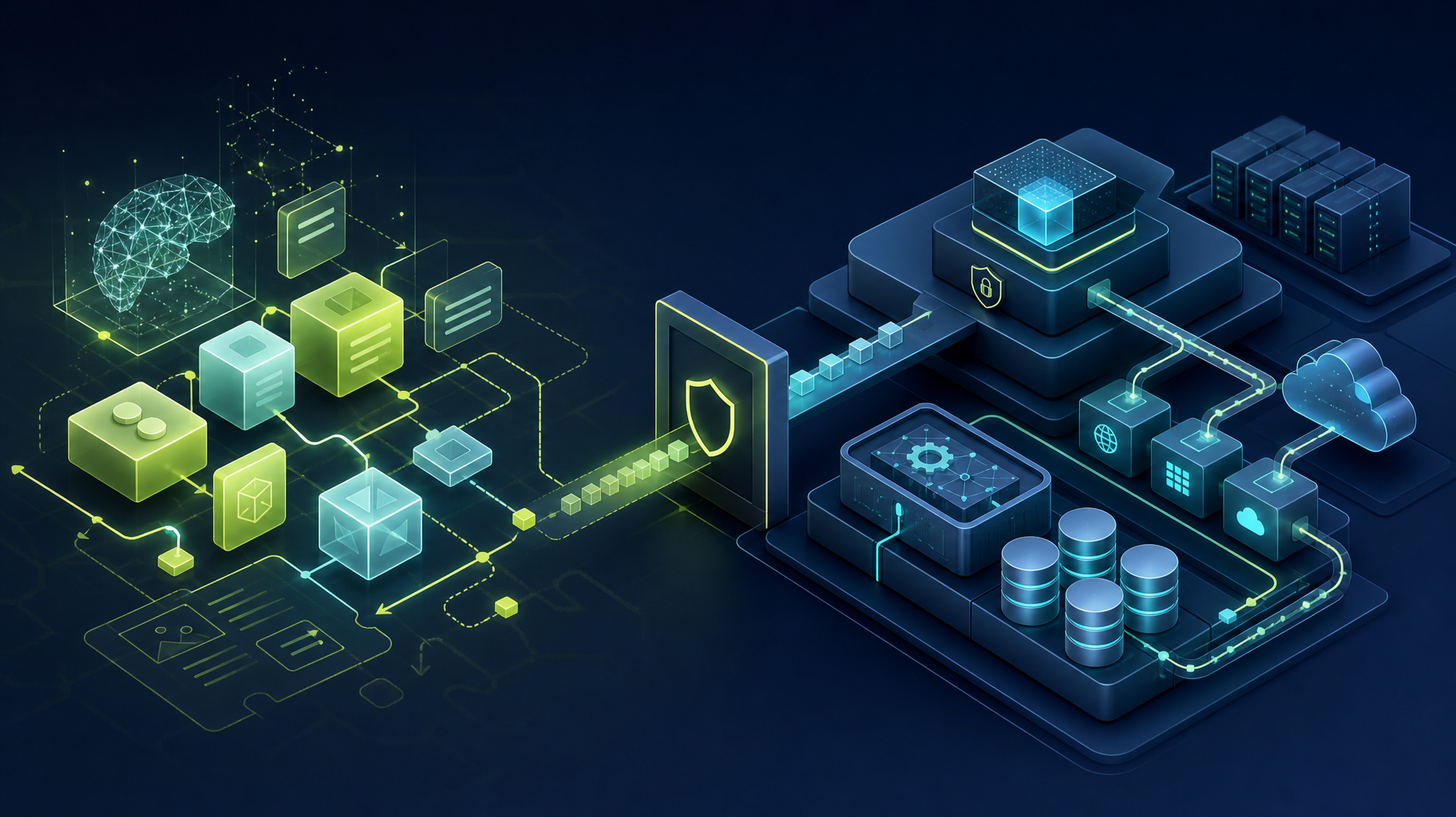
At Somnio, we use AI inside a structured engineering workflow so the first version is not just fast. It is scoped, reviewed, tested, and designed around the business process it is meant to improve.
That is what we mean by AI-native engineering.
Not one person chatting with one model.
A coordinated workflow that turns product decisions into reviewed, production-ready software.
The old AI coding loop
Most teams start with a simple loop:
- Ask AI to build something.
- Paste the result into the app.
- Run it.
- Fix what breaks.
- Repeat.
This works for small tasks. It falls apart as the product grows.
The model loses context. The codebase gets inconsistent. The same patterns are reinvented. Review becomes harder. Technical decisions are made inside individual prompts instead of at the system level.
That is not an AI-native engineering workflow.
That is assisted coding.
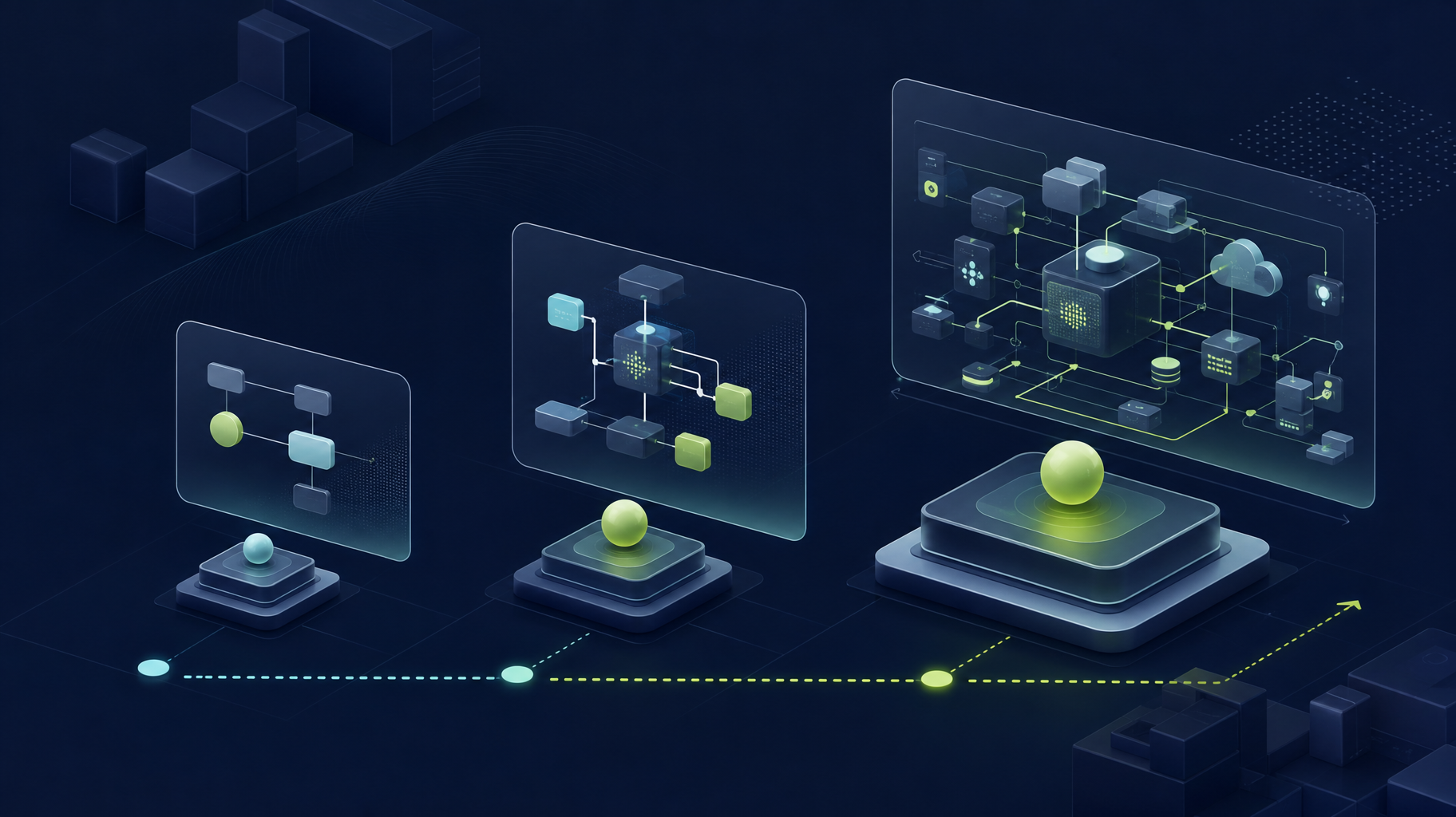
The new workflow: orchestration, not prompting
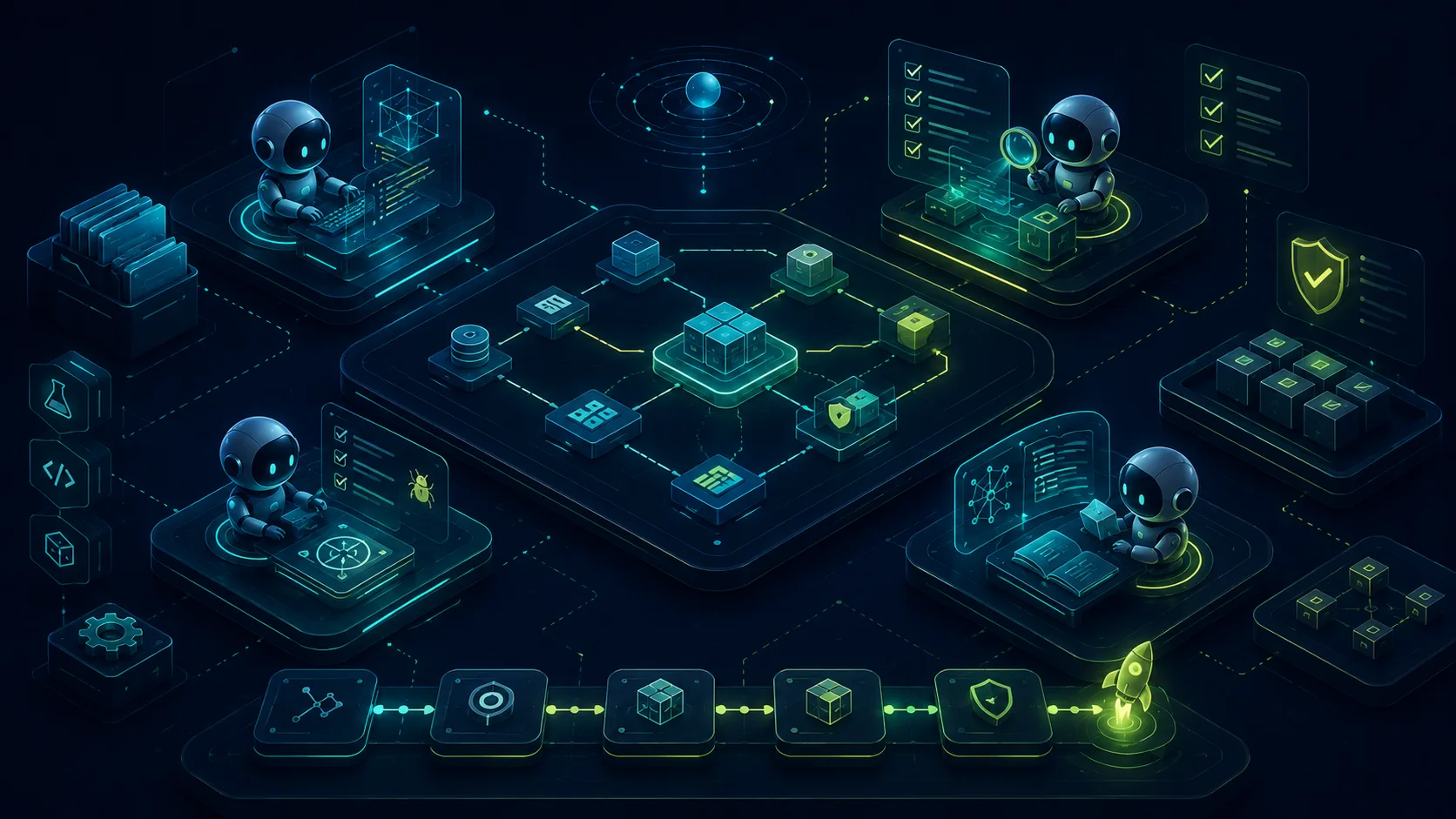
An AI-native engineering workflow treats AI like a set of specialized workers operating inside a system.
The system matters more than any single prompt.
The workflow includes:
- A clear product spec: what the product should do, who it is for, and which workflow matters first.
- An architecture plan: how data, permissions, integrations, state, queues, and AI features should behave.
- Worker agents: AI agents assigned to scoped implementation tasks.
- Review agents: separate AI agents assigned to critique implementation, edge cases, security, and tests.
- Human architecture oversight: a senior engineer making final decisions when requirements, code, and product risk collide.
- Reusable prompts, specs, and checklists: captured patterns that make future work faster and more consistent.
The goal is not to remove the engineer.
The goal is to move the engineer up the stack.
Instead of manually typing every repeated pattern, the engineer designs the system, delegates implementation, reviews outputs, and captures reusable knowledge.
What you actually get
For a founder, the value is not that Somnio uses AI.
The value is what the workflow produces:
- A validation build or MVP shipped faster without relying on a prompt-paste-fix loop.
- A reusable build system underneath it, so the next feature does not cost what the first one cost.
- A second reviewer on meaningful changes, so the thing you demo on day 30 still works on day 90.
- A human architect making the calls that matter, so you are not betting your runway on a model.
- Code your future engineers can read, so you are not locked into Somnio.
For an operations-heavy business, the value is similar.
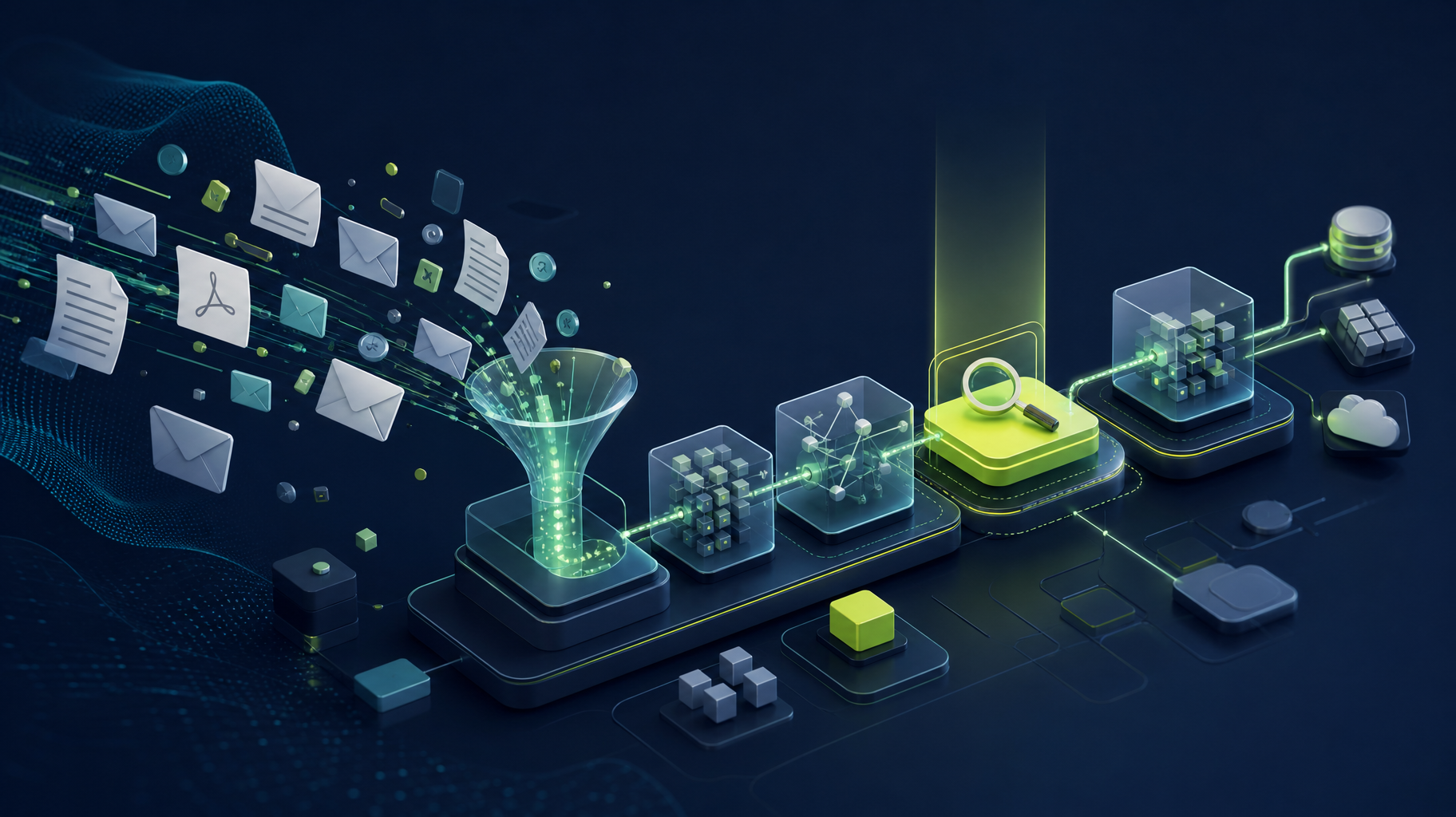
The workflow helps turn messy manual processes into software without pretending the mess does not exist. Customer onboarding, approval workflows, email configuration, billing rules, internal reporting, document processing, and API integrations all need the same thing: clear boundaries before fast implementation.
Worker agents for implementation
Worker agents are useful when the task is clearly scoped.
Examples:
- Build this onboarding flow against this spec.
- Add this email configuration workflow.
- Implement this billing rule.
- Create this API integration.
- Write tests for this business rule.
- Refactor this component to follow the existing pattern.
The key is specificity.
Agents perform better when they are not asked to make every product and architecture decision at once. They need constraints, examples, and clear acceptance criteria.
That is why the planning layer matters so much.
If the spec is vague, the agent fills in the blanks. If the architecture is unclear, the agent chooses the nearest convenient solution. If the acceptance criteria are weak, the implementation can look finished while missing the business risk.
QA agents for review
The implementation agent should not be the only reviewer of its own work.
In our workflow, a separate review model can run a structured QA pass against the spec and the diff, not just the code.
The review should produce a clear verdict:
- Pass: the change matches the spec and risk is acceptable.
- Revise: the change is directionally right but needs specific fixes.
- Fail: the change misses the spec, introduces risk, or should be redesigned.
The review asks questions like:
- Does the implementation match the spec?
- Are edge cases covered, or only the happy path?
- Did the change introduce security risks or hidden coupling?
- Is the state model more complex than the problem requires?
- Are tests present and meaningful, not just present?
- Does the code follow the framework’s existing conventions?
When the review agent and build agent disagree, the human architect resolves the spec ambiguity, not the code argument.
The agent revises against the clarified decision.
This is the loop that makes the workflow production-grade: one agent builds, another reviews, a human owns the architectural decision, and neither agent ships on its own authority.
Pattern capture is the compounding advantage
The most underrated part of AI-native development is pattern capture.
If you keep building the same systems, you should not keep rediscovering the same instructions.
Common patterns should become reusable prompts, specs, and checklists:
- Onboarding flows.
- Email configuration.
- Multitenancy.
- Billing and plan limits.
- API integration setup.
- Admin workflows.
- Role and permission systems.
- QA review checklists.
This turns experience into leverage.
The first time you build a pattern, you learn. The second time, you refine. The third time, it should become part of the studio’s operating system.
That is how AI compounds.
Where orchestration tools fit
The durable idea is not a specific model or tool list.
The durable idea is model-agnostic orchestration.
Tools like SoloTerm can act as a meta-harness for agent work. They help coordinate different AI tools and models inside the same development process.
That matters because no single model is best at everything.
Some models are better at broad planning. Others are better at code generation. Others are better at critique, QA, or long-context reasoning.
The workflow should be able to use the right model for the job and swap models over time without rebuilding the entire development process.
Founders do not need to care about every internal tool.
They do need to care that the process is not dependent on one magic prompt, one model, or one engineer’s private workflow.
Why this matters before production
The wrong question is:
“Which model writes the best code?”
The better question is:
“What system helps us turn product decisions into reviewed, production-ready software?”
Models will change. Tools will change. Benchmarks will change.
The operating system around the work matters more.
That operating system should protect the product from random prompt drift, missing edge cases, inconsistent patterns, and unreviewed AI-generated decisions.
Before you build with agents
If you are building an AI MVP, do not only ask whether your developer uses AI.
Ask how the AI workflow is structured:
- Who writes the product spec?
- Who owns architecture decisions?
- Which work is delegated to agents?
- Who reviews AI-generated changes?
- What happens when the builder and reviewer disagree?
- How are edge cases and security risks tested?
- How are repeated patterns captured for future work?
- How do you know the code can be maintained by another engineer later?
If a team cannot answer those questions, it may still be using AI.
But it is not yet running an AI-native engineering workflow.
Book an AI MVP Architecture Call to map one workflow, identify the highest-risk implementation decisions, and leave with a practical build plan before committing to development.
Related resources
- AI MVP development
- AI-assisted software development process
- Development timeline estimator
- AI savings calculator
- Architecture consulting